
Do I detect an appetite for optimism?
Amongst the gloom, people are looking for solutions. They exist - elsewhere

It’s been a frantic few days since publication of Braver New World on April 16. For those who haven’t heard Start the Week on Radio 4 or any of the other media appearances, my website will have full details.
I also penned a two-page essay for The Times which appeared last Saturday. It was great to be asked. I was even more heartened by the extremely positive comments from readers. There seems to be an appetite for optimism - of the radical and practical variety.
This morning I did an enjoyable discussion on the Today programme, setting out several examples of good practice around the world.
Last but by no means least, if you buy a subscription to the excellent The New World, you get a copy of the book for free. On- and offline, and on Substack, the magazine consistently produces content that you struggle to find elsewhere. It dares to look beyond Britain’s shores. Here’s a long chat with The Two Matts in their podcast.
What follows is an abridged version of my Times piece, setting out some of the themes.
Please buy the book. Please engage in the arguments. Please spread the word:
Liberal democracy — the architecture surrounding it and the values underpinning it — is going through its deepest crisis since 1945. Governments from established parties struggle to boost their economies, improve people’s lives and address long-term challenges such as ageing and climate that threaten even worse to come.
Everywhere you look, you see liberal democratic leaders paralysed with fear. They worry about financial markets (with reason); they fret about conventional media and social media (with less reason). They wait for bad things to happen, trying to anticipate what their critics might say in case they put a foot out of line. It’s a self-fulfilling spiral. We’ve built a political class allergic to spontaneity, terrified of taking risks.
The ingredient that eludes them is courage. The politics of caution and incrementalism, epitomised by Keir Starmer and others in Europe, will finish off democracy.
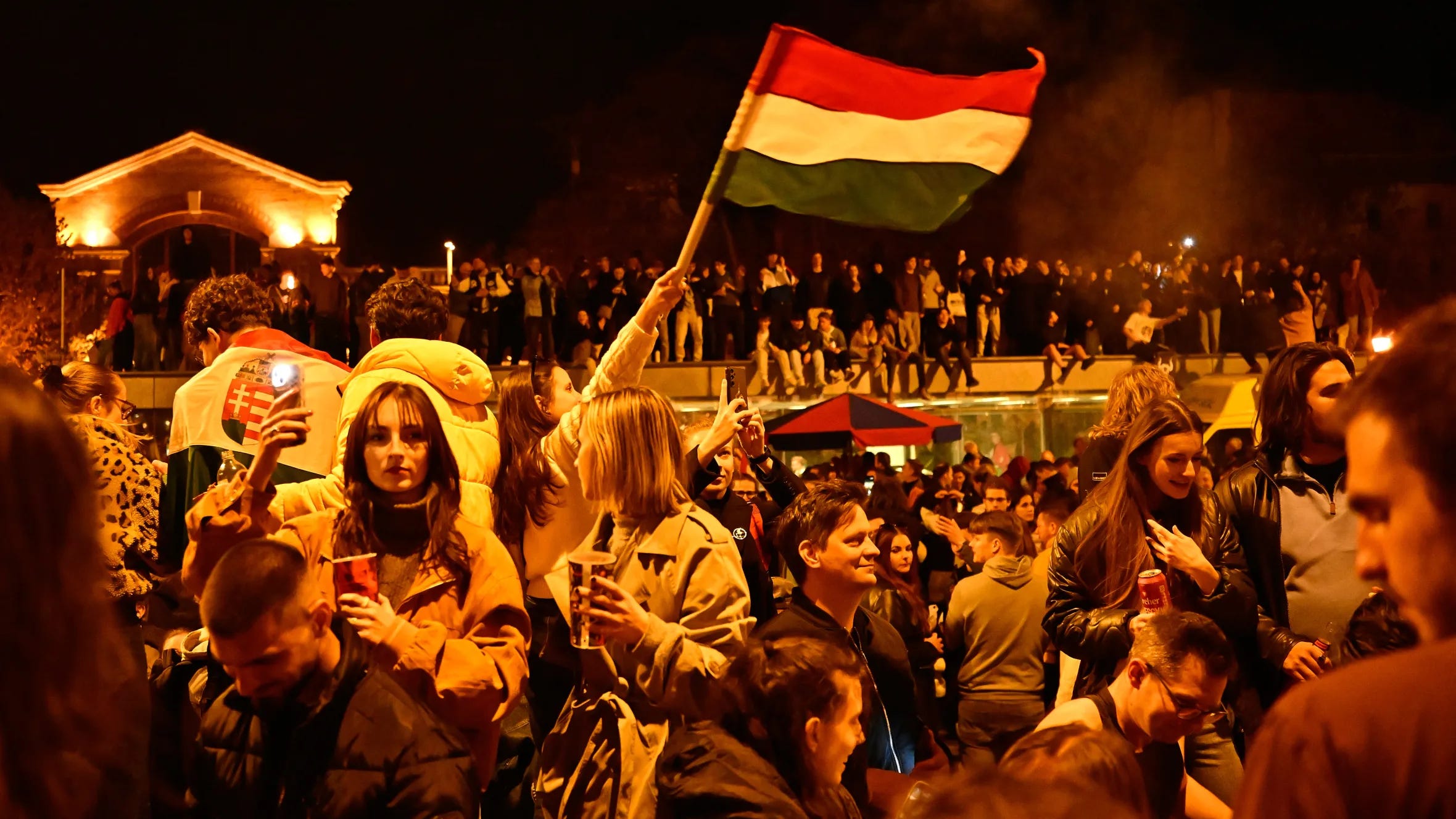
That is lesson number one for Peter Magyar, the new Hungarian prime minister, the ray of hope after 16 years of Orban intimidation and sleaze. He has shown great resilience in getting this far. Will he be similarly bold in office? If not, he will be swept away before he knows it. The same applies everywhere.
If mainstream politicians don’t think more boldly about the future, they won’t have a future.
Trump’s one positive contribution has been to shake us out of our torpor, to make us realise that caution does not work. But the courage I am advocating is the opposite of bombast or triangulation — placing yourself in the middle of two extremes, looking over your shoulder for any criticism from the loudest voices, as Starmer has done almost from the moment he took office.
No, true political courage is about being honest with your citizens and making decisions that in the short term can be unpopular but in the long term are unavoidable. And so, over the past three years I have gone on a journey in search of good practice, of countries and cities seeking to meet the challenges of present and future with innovation and imagination.
We share similar problems. Where am I going to live? Who will look after me when I get old or sick? Am I learning the right skills to face the challenges of artificial intelligence? Do I have information I can trust? What kind of community do I want to live in? How can my environment be protected without it costing me my livelihood? Wherever we look, someone has a lesson for us, if only we have the humility to want to learn. All the solutions I cite are transferable to countries such as ours.
Some examples: at the time of the financial crash in 2007, Morocco was almost completely reliant on imported fossil fuels for its energy. Then, as now with the Iran crisis, oil prices surged. The king ordered an overhaul, to build wind and solar plants to ensure that over half the energy mix would come from renewables by 2030. Having hit their interim targets early, they will easily do that. Morocco saw the dangers and opportunities in advance, did not delay and took a hard-headed economic decision.
In Vienna, 60 per cent of properties are public housing; much of it is of stunning quality. Underpinning the system are shared responsibilities. Housing collectives designate jobs to match residents’ skills — the plumber, the IT specialist, the teacher. Such is the prestige of these developments that famous architects compete more keenly for contracts than they do for private projects.
Finland’s education system is not defined by rote learning or tests but by training teachers to the highest standard (you need a master’s degree) and then trusting them. At a school in Tampere, alongside the core subjects of maths, science and language I saw pupils learn business skills, media literacy and democracy. With a threatening Russia just over the border, the emphasis is on self-reliance.
On restoring independence from the USSR in the early 1990s, Estonia saw in the rapid adoption of technology a route to security. It was called Tiger Leap. The country now has one of the world’s most sophisticated cybersecurity systems and works hand in hand with Ukraine. Estonia also represents a new form of citizen democracy. Each of its 3,000 state services can be accessed online. You could long ago file papers for marriage; now you can for divorce, too. Tax returns are filled out in minutes. It is reckoned that e-government has saved 2 per cent of GDP and gives each person an extra week of time off. Most importantly, citizens control their own data. This is not dreamy utopianism. It gives people a practical stake and builds trust.
Estonians (and pretty much everyone else in Europe) are baffled by British hang-ups about digital ID. Brits seem relaxed about cameras on every street corner but when it comes to a single, easy-to-use credential that would dramatically improve their access to services, they balk.
Starmer was intrigued by the Estonian example, but when he announced a British version, he put short-term exigency over long-term benefit. It was all about cracking down on illegal immigration, he declared. It would, for sure, help do that. Nowhere is it easier than in the UK to disappear. Yet the PM missed a huge opportunity to present a bold vision of government working for the people. It was an object lesson in how a government acting timidly ends up reinforcing scepticism on all sides.
Japan is at the forefront of one of the most important challenges facing mankind: the ageing of our populations. By the end of this century, it is predicted that 97 per cent of the world’s nations will have fallen below the replacement rate of births. Successive Japanese governments have shown that if you cannot avoid a problem, you might as well confront it. And they have a problem. By 2050, four in ten Japanese are expected to be pensioners. The number of centenarians could reach half a million.
Back in 2000, Japan introduced the long-term care insurance system, one of the first states to do something of that sort. The system is a mix of insurance, taxation and co-payment (a small fee per visit). Everyone over 40 is obliged to start paying. It has become part of the social contract. Everyone pays and, in the end, everyone benefits.
Once you or your family think you need some form of care, eligibility is determined initially by a 74-item multiple choice questionnaire. A software package generates a tailored care plan — there are seven levels — and a dedicated care manager is entrusted to the individual. Every social care programme is reassessed every three years to ensure the money is well spent and that services are keeping pace with technology. The average monthly cost for over-65s receiving care is a little over 6,000 yen, or around £30. The wealthiest pay three times as much.
I was most impressed by the ways in which communities integrate the elderly into day-to-day-life, creating a new form of intergenerational living. In a residential street in Fujisawa, near Yokohama, students receive subsidised accommodation; in return, on their way to and from classes they pop in to say hello to the old folk living on the floor below. A separate initiative came into effect last year: Kayoinoba, meaning “having a place to go to”. It is designed to ensure that as many older people as possible can live independently, while receiving long-term care within 30 minutes of home. Community support centres are also being established in all municipalities, a series of drop-in hubs the elderly can access for non-urgent medical care, advice, a meal or simply company. To get it right, the Japanese started planning for all this 20 years ago.
Compare that with the UK, which has been shirking the social care challenge for decades. Successive prime ministers have called for change yet run away from it, fearful of a public backlash at the costs involved. Theresa May’s candid proposals on the issue — denounced by Labour as a “dementia tax” — almost lost the 2017 election for the Conservatives. But what is Britain left with? A non-system that covers precious few and is based on the blithe assumption that most elderly will buy their care through the sale of assets.
Neither hubristic populists nor frightened mainstream governments are levelling with citizens about the rewiring required. No serious discussion is taking place about how public services can be maintained in the future, or about the skills required to equip the next generation. From climate to immigration to the future of the welfare state, the short-term politics and the long-term economics point in opposite directions.
There is no instant solution. But there are directions others are taking that we too should adopt: accept that the old ways are over; be ever self-critical, open to best practice elsewhere and reject “we know best” hubris; accept that what matters is delivery not ideology and be prepared to ditch shibboleths; embrace modernisation and digital solutions; plan for the long term, not merely the next election; be candid with citizens and don’t hide problems from them. Most of all, demonstrate courage. But for our governments to take greater risks, we the people need to demonstrate greater resilience. We need to confront hard truths and reward those thinking afresh.
If we don’t, we will have only ourselves to blame.
Currently reading "Braver New World" and am enjoying the optimism of solutions and approaches to issues gathered around the world plus the healthy lack of confidence in our outdated political systems and political class.
Although only 50 % through the book what is missing for me is a radical strategic plan addressing how as a global society we can collaborate on a scale never seen before to address the fundamental issues affecting us all.
I will share that I am not a political animal but come from and engineering and project management background working and supporting delivery and process improvements on projects and programs of $10B plus value. As engineers and Project managers we dont just talk about it. we deliver!
Johns excellent book has prompted me to continue drafting my next book "Collaboration Dawn" of which 7 of the circa 20 draft chapters are available on substack https://collabdawn.substack.com/p/collaboration-dawn .. Last year I was seriously disillusioned and stopped researching and drafting due to the worsening geopolitical events but recently reading articles where people are looking to discuss radical change has re-motivated me. If you have time please read and would welcome and constructive comments and discussion
Timely notification of an inescapable issue in many people’s near future. By the looks of it no one in politics is able to explain to Brits why funds have to be made available. Oh well, it’s going to hit those people as well!